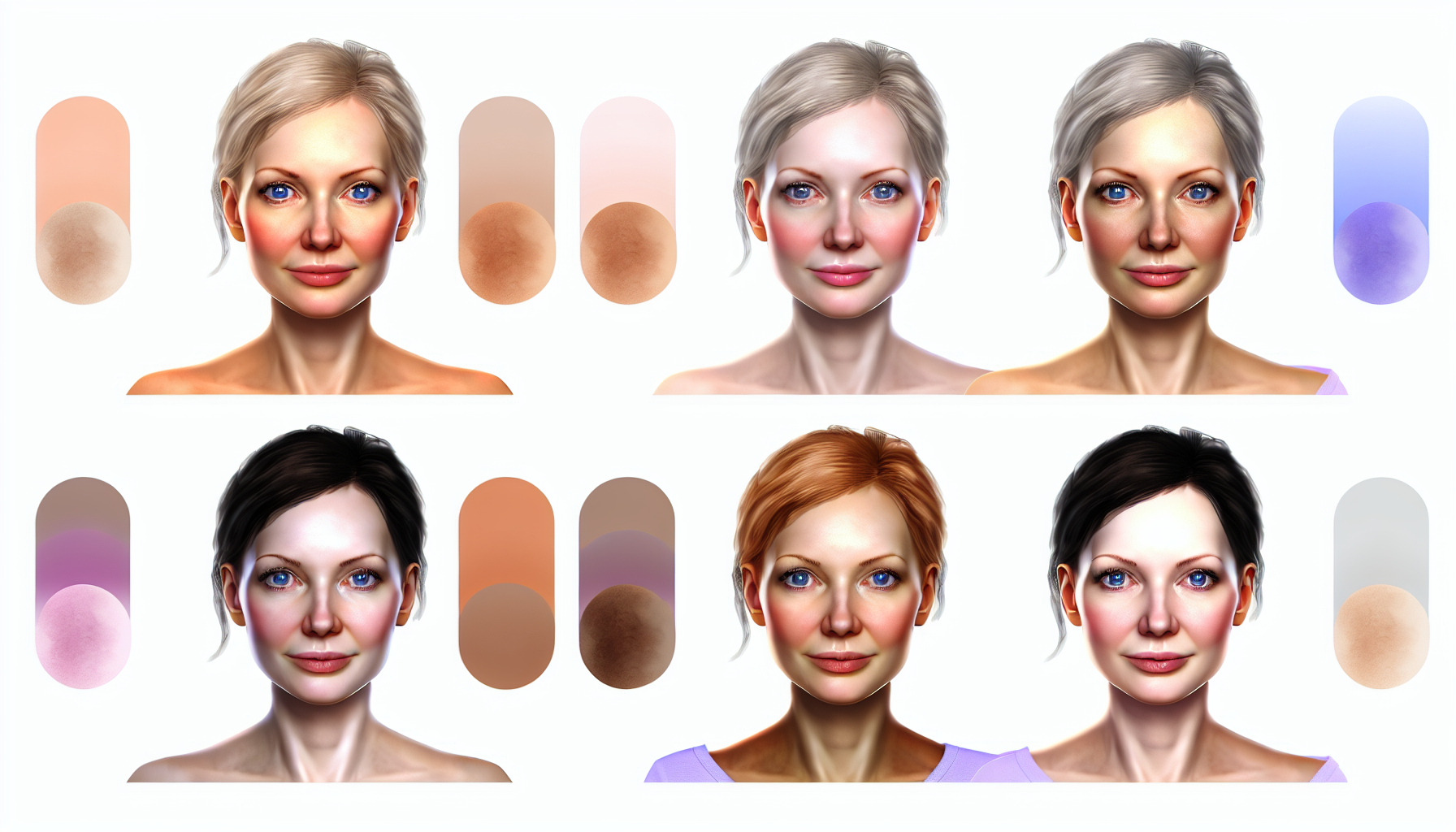
I used to stare at my closet, wondering why some outfits just clicked and others made me feel… meh. It was like a fashion mystery, and I was determined to solve it!
To choose the perfect color palette for each season, you must first perform a seasonal color analysis. This involves identifying your skin's undertone (cool or warm) and the contrast level of your features to determine which of the four seasons—Spring, Summer, Autumn, or Winter—your coloring aligns with. Each season has a distinct palette of colors that will naturally complement your appearance.
Now, I know what you might be thinking: 'Sounds easy enough!' But trust me, I've been there, staring at my veins and wondering if they were really blue or just... vein-colored. That's why I dove deep, did all the legwork, and distilled it into this guide, just for you. Get ready to uncover your true colors and revolutionize your personal style!
Your core undertone is determined by genetics and does not change. However, factors like aging or hair color may shift you into a different sub-season.
Before finding your color season, you must solve the first piece of the puzzle: your skin's undertone. This subtle hue beneath your skin's surface is the secret key that unlocks your most flattering color palette, ensuring you always look your best.
To determine your skin's undertone, use simple at-home tests. Check your wrist veins: blue or purple indicates a cool undertone, while green suggests warm. Another method is the jewelry test: silver flatters cool tones, and gold complements warm tones. These tests help identify if you are cool, warm, or neutral.

Understanding your skin's undertone is the foundational step in seasonal color analysis. It's the permanent, underlying color that your surface skin tone has. While your skin tone might change with sun exposure, your undertone remains constant. Here are a few reliable methods to help you identify it:
This is one of the quickest and most common methods. In natural daylight, look at the veins on the inside of your wrist.
Your favorite jewelry might hold the answer. Drape a piece of silver jewelry and a piece of gold jewelry across your hand or neck and see which one makes your skin look more vibrant.
Hold a sheet of plain white paper up to your clean, makeup-free face in natural light. The stark white can help reveal the subtle hues in your skin.
Here's a quick summary table:
| Test | Cool Undertone | Warm Undertone | Neutral Undertone |
|---|---|---|---|
| Vein Color | Blue or purple | Green or olive | A mix of blue and green |
| Jewelry | Silver/Platinum looks best | Gold looks best | Both look good |
| Sun Reaction | Burns easily, rarely tans | Tans easily, rarely burns | May burn then tan |
By using these methods, you can get a clear idea of your natural undertone. For those who want more examples, a comprehensive skin undertone guide1 can provide further clarity.
According to the vein test, greenish veins suggest a warm undertone. This is because you are seeing blue veins through yellowish skin, making them appear green.
The text clarifies that while your surface skin tone might change with sun exposure, your undertone remains constant throughout your life.
Understanding the four color seasons is like having a secret style weapon. Each season—Spring, Summer, Autumn, and Winter—has a unique set of characteristics that defines its ideal color palette. Let's explore what makes each one distinct and beautiful.
Each color season is defined by two main factors: undertone (warm vs. cool) and value/chroma (light/bright vs. deep/muted). Spring is warm and bright, Summer is cool and muted, Autumn is warm and muted, and Winter is cool and bright. Identifying these traits helps you find your most flattering colors.

Each of the four seasons corresponds to a specific combination of undertone, value (lightness/darkness), and chroma (brightness/mutedness). Once you've determined your skin's undertone, you can narrow down your season. For more help, you can find a detailed seasonal color analysis guide2 online.
Individuals in the Spring category have warm, golden undertones. Their overall coloring is light and bright, with low contrast between their skin, hair, and eyes. Think of the fresh, vibrant colors of a spring day.
Summer types have cool, blueish or pinkish undertones. Their coloring is typically light and soft, with a gentle, low-contrast appearance. The Summer palette is reminiscent of a hazy, sun-drenched summer afternoon.
Like Spring, Autumns have warm, golden undertones, but their coloring is deeper and more muted. There's a rich, earthy quality to their look. The palette reflects the shades of a fall landscape.
Winters possess cool, blueish or pinkish undertones with a striking, high-contrast look. Their coloring is deep, clear, and vivid. Think of the sharp, dramatic colors of a winter scene. Seeing visual examples of celebrity color seasons3 can help clarify these distinctions.
Here is a table summarizing the key characteristics:
| Season | Undertone | Value | Chroma | Best Colors |
|---|---|---|---|---|
| Spring | Warm | Light | Bright | Peach, Coral, Lime Green |
| Summer | Cool | Light | Muted | Dusty Rose, Sky Blue, Lavender |
| Autumn | Warm | Deep | Muted | Terracotta, Olive, Mustard |
| Winter | Cool | Deep | Bright | Royal Blue, True Red, Black |
Spring has warm undertones, but Summer is defined by cool, blueish or pinkish undertones, making this statement false.
Yes, the Autumn season is characterized by warm and muted tones, with terracotta, olive green, and mustard yellow being ideal colors.
Now that you've identified your color season, the real fun begins! Let's turn that knowledge into a closet full of clothes that make you look and feel incredible every single day.
To build a wardrobe with your seasonal colors, start by decluttering items that clash with your palette. Next, invest in core neutral pieces specific to your season (like jackets, trousers, and skirts). Finally, introduce your season's accent colors through tops, accessories, and statement items for a cohesive and versatile collection.

Building a wardrobe around your seasonal colors is a strategic process that simplifies dressing and elevates your style. It ensures every piece works in harmony, making it easy to create stunning outfits effortlessly. Here’s a step-by-step guide to get you started.
Begin by going through your current wardrobe. Hold each item up to your face and compare it against your seasonal color swatch. Does it flatter you? If a piece makes you look tired or washed out, it's likely outside your palette. Be ruthless and create three piles: keep (it's in your palette and you love it), donate/sell (it's not in your palette), and undecided (for items you're emotionally attached to).
Neutrals are the backbone of your wardrobe. They are the versatile, go-with-anything colors that provide a canvas for your accent shades. Each season has its own set of ideal neutrals. Investing in these first is key to building a functional wardrobe.
| Season | Core Neutrals |
|---|---|
| Winter | True Black, Pure White, Charcoal Gray, Navy Blue |
| Summer | Soft White, Light Gray, Taupe, Powder Blue |
| Autumn | Cream, Camel, Chocolate Brown, Olive Green |
| Spring | Ivory, Light Beige, Warm Gray, Light Navy |
Once your neutral base is solid, it's time to introduce color! These are the vibrant shades from your palette that express your personality. Start by adding accent colors with less expensive items like T-shirts, blouses, scarves, and jewelry. This allows you to experiment without a huge commitment. The goal is to build a creating a capsule wardrobe4 that is both functional and beautiful.
The beauty of a seasonal color wardrobe is that everything naturally goes together. You no longer have to wonder if your top matches your pants. By sticking to your palette, you can mix and match with ease. Experiment with different color combining techniques5 like monochromatic (different shades of one color) or analogous (colors next to each other on the color wheel) looks within your season's palette to create visual interest.
The guide specifies True Black as a core neutral for the Winter palette, while other seasons have their own distinct sets of neutrals like cream, taupe, or ivory.
The text advises starting with a neutral foundation (jackets, trousers) before layering in accent colors with items like tops and accessories for maximum versatility.
It's a common question in the world of color analysis: once you've found your season, is it for life? While your fundamental coloring is set, certain life changes can indeed shift how you wear your palette. Let's explore the nuances of this fascinating topic.
No, your fundamental color season, which is based on your skin's genetic cool or warm undertone, does not change. However, factors like aging, significant tanning, or drastic hair color changes can alter your appearance, potentially shifting you into a different sub-season or allowing you to borrow colors from a neighboring palette.

The idea of your color season changing is a source of much debate, but the answer isn't a simple yes or no. It hinges on understanding the difference between your core seasonal identity and how certain factors can influence your appearance over the years.
Your skin's undertone—the underlying cool (blue, pink, red) or warm (yellow, peach, golden) hue—is determined by your genetics. This is the foundation of your color season and does not change. If you are born a Winter (cool undertone), you will always have a cool undertone. Similarly, an Autumn (warm undertone) will not suddenly become a Summer (cool undertone).
While your core season is stable, your 'sub-season' or the way you present within your season can be influenced by several life changes. This is where the concept of a shifting palette comes into play. The 12-season color analysis6 system helps explain these nuances.
Aging: As we age, our hair often turns gray, silver, or white, and our skin may lose some of its pigmentation. This process typically reduces the overall contrast in our features. For example, a high-contrast 'Deep Winter' might find that as their hair whitens, they transition into a softer, lower-contrast 'Cool Summer' palette. They are still cool-toned, but the intensity of the colors that flatter them has softened.
Significant Tanning: A deep, consistent tan can add a layer of warmth to the surface of your skin. This doesn't change your cool undertone, but it can temporarily allow you to borrow some colors from a neighboring warm season. For instance, a Summer might find they can handle some of the softer Autumn colors when they have a tan. However, their best colors will always be within their core cool palette.
Drastic Hair Color Changes: Changing your hair color from blonde to dark brown or from brunette to fiery red can dramatically alter your contrast level. Someone who is a 'Light Spring' might find that dyeing their hair a deep, rich brown pushes them into looking more like a 'Warm Autumn.' While their undertone remains warm, the change in contrast and depth means their ideal color palette needs adjustment to create harmony.
Your skin's undertone is genetic and does not change. A warm season will not become a cool season, as this core trait is a constant factor.
Yes, as you age, hair and skin can lose pigmentation. This may reduce your contrast, shifting you to a softer sub-season within your original core season.
There you have it! Your personalized roadmap to a wardrobe that makes you shine. Embrace your unique seasonal colors, and I promise, your confidence will soar. Go on, step out and glow!
See visual examples and get in-depth guidance to confirm your undertone results: This guide on How to Determine Your Own Skin Undertones will walk you through various methods to accurately identify whether you have cool, warm, or neutral ... ↩
Take a guided quiz to help you discover your unique color season: My super quick “What Season Am I?” quiz will get you sorted out once and for all! It's only 8 questions and it's no fluff, promise. ↩
See how seasonal colors look on well-known faces for style inspiration: Celebrities. Meet some of the people you know and love living their best colours. BSp10.jpg. Bright Spring. TSp20.jpg. True Spring. LSp12.jpg. Light Spring. ↩
Learn to create a minimalist, versatile wardrobe using your seasonal color palette: Start with a mostly neutral color palette. Neutral pieces are easier to mix and match, which is what makes a capsule wardrobe feel simple and functional. Common ... ↩
Master the art of combining colors for stunning and harmonious outfit combinations: Navy and green! You just need the right shade of green. Also goes well with yellow or gold. Or white, or pink. I love navy. ↩
Learn about the nuanced sub-seasons for a more precise color palette: Twelve seasons colour analysis comprises four main seasons – Spring, Summer, Autumn and Winter. These are further divided into three sub-seasons each. ↩
Recommended reading: the latest three posts in this language.

Ever find yourself scrolling, searching for that perfect little mental escape? I know I do! When it comes to online tile puzzles, the options can feel endless. But don't worry, I've sifted through the colorful chaos to find the absolute best, including the beloved original Google game and some fantastic alternatives, just for you.

Remember that feeling when your social media posts just... vanished into the feed? I certainly do! For ages, I struggled to make my words pop. Then, I stumbled upon fancy font generators, and honestly, they've been a game-changer. They're my little secret for crafting text that truly stands out, making my content memorable without needing any fancy design degrees.

Have you ever just stopped to stare at the vast, endless blue of the sky or the deep, mysterious ocean? It feels like blue is everywhere, right? But then I started noticing something peculiar: when it comes to living things—plants, animals, us—true blue is incredibly hard to find. It got me wondering: why is such a common color in our world so shockingly rare in the vibrant tapestry of life? Let's explore this beautiful mystery together.
